Alec
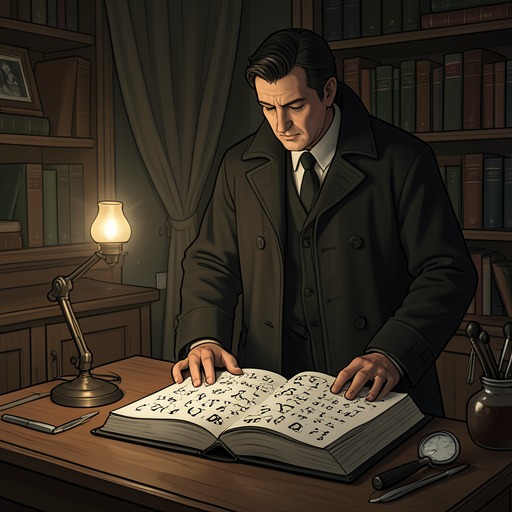
The King in YellowAlec, the narrator of The Mask, is the intimate witness through whom Boris Yvain’s friendship, Geneviève’s love, and the devastating consequences of their shared life are understood. An American artist associated with the Beaux Arts, he belongs to a small circle that includes Boris and Jack Scott, yet his private love for Geneviève places him in an unspoken rivalry with Boris. Alec’s decisive significance lies in the contrast between desire and conduct: although Geneviève chooses Boris, Alec congratulates the man who has won her, imagines withdrawing from both of them without accusation, and finally survives their deaths as the custodian of Boris’s artistic legacy.
Identity and Artistic Circle
Alec presents himself as one of only two people whom Boris Yvain addresses familiarly; the other is Jack Scott. Their closeness rests partly on shared artistic life and partly on a claimed American identity. Boris, though the son of a French father and a Russian mother, was born in America, and the three men’s allegiance to him is expressed as a collective act of ownership: they are proud of him, claim him, and are claimed by him in return. Alec therefore enters the story not as an isolated observer but as a member of a chosen artistic household whose intimacy gives later losses their force.
His position is also defined by judgment. Boris has completed an academic Ariadne for the Salon, a technically magnificent work that seems inadequate after the success of the Madonna, the marble for which Geneviève sat and which had been the sensation of the previous year. Alec agrees that the world expects more from Boris, while recognizing that the unfinished Fates, a terrible sculptural group still half concealed in the marble, cannot be completed in time. His response shows him as an artist capable of distinguishing technical accomplishment from a work’s larger promise, and it places him close enough to Boris to share both ambition and disappointment.
Love, Rivalry, and Deliberate Restraint
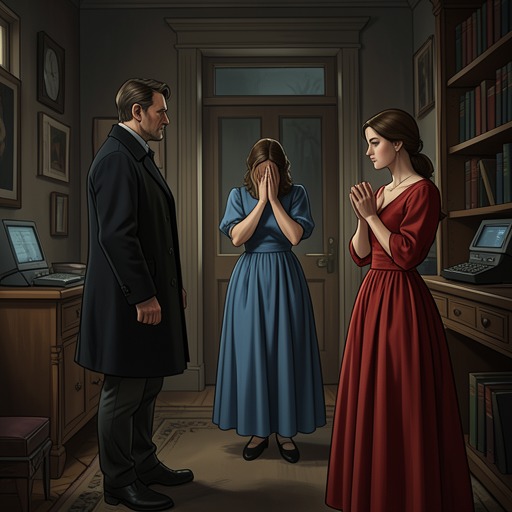
Alec’s love for Geneviève is never formally acknowledged between them, but it shapes his understanding of Boris’s affection. He suspects that his love may have contributed to Boris’s attachment to him, as though Boris recognizes the emotional risk Alec has accepted without requiring him to confess it. When Geneviève tells Alec, with tears in her eyes, that Boris is the man she loves, Alec goes to Boris’s house and congratulates him. The interview is perfectly cordial, but Alec believes that neither man is deceived by its surface. The cordiality comforts at least one of them, even though it cannot erase the knowledge of what has happened.
Alec also perceives Geneviève in more than one emotional register. Her face possesses a Madonna-like purity, yet he prefers the changing moods he calls her April Manoeuvres: gravity in the morning, laughter and caprice at noon, and unpredictability by evening. This preference matters because it separates his love from a static idealization. He is moved by her calm beauty, but he is more drawn to her variability and life. His attachment is therefore not merely to the image that Boris’s Madonna preserves; it is directed toward a person whose moods resist simplification.
Illness, Recovery, and the Intended Departure
After a period of delirium and physical collapse, Alec awakens to find Jack Scott reading beside his bed. He lacks the strength to speak or think clearly, but his first whispered request is for Boris. Jack tells him that he is too weak even to see Boris, and Alec waits while his body recovers and his memory returns. The recovery is not presented as a simple restoration. Once the past becomes clear, Alec begins reconstructing the future he believes duty requires.
Alec imagines resuming relations with Boris and Geneviève exactly as before her illness. He expects to look into Boris’s eyes without rancor, cowardice, or mistrust, to spend a short time again in the intimacy of their home, and then to disappear from their lives forever without pretext or explanation. Boris, he believes, will understand; Geneviève, he thinks, will never know the reason. In this projected departure, Alec converts jealousy into a promise of non-possession. He does not claim that his suffering entitles him to expose the concealed emotional history or to demand recognition. Instead, he treats withdrawal as the only answer to an obligation that has persisted through delirium.
When Alec is ready, he asks Jack to bring Boris at once and to carry his dearest greeting to Geneviève. The request reveals how completely his imagined ethical future depends on their continued existence. He has planned the manner of his renunciation, but not the possibility that there will be no reunion in which to perform it. When Jack finally makes him understand that both Boris and Geneviève are dead, Alec falls into a wild rage, curses himself, and relapses. His body registers the collapse of the future he had built: the self-sacrifice that might have given his grief a direction becomes impossible because death has already removed the people to whom it was addressed.
Boris’s Will and the Aftermath
After emerging from the relapse, Alec receives a letter and the keys to Boris’s house. He accepts them without a tremor and asks Jack to tell him everything, even though he knows that the request will force Jack to reopen a wound that can never fully heal. The scene reverses Alec’s earlier position as the one waiting to see Boris. He must now receive Boris through documents, property, and Jack’s exhausted account rather than through an encounter between living friends.
The letter is Boris’s will, dated a year earlier. Boris leaves everything to Geneviève; if she dies childless, Alec is to take control of the house in the Rue Sainte-Cécile, while Jack Scott is to manage the property at Ept. After Alec and Jack die, the property is to revert to Boris’s mother’s family in Russia, except for the sculptured marbles Boris executed himself, which he leaves to Alec. The arrangements distinguish practical stewardship from artistic inheritance. Alec is entrusted with the works that most directly embody Boris’s hand, while Jack receives responsibility for management at Ept and the Russian family remains the ultimate heir to the property.
Jack then tells Alec that Geneviève lies before the Madonna in the marble room, with the sculpture bending above her and Geneviève smiling toward the calm face that would not have existed without her. The image fuses the personal and artistic strands of Alec’s story. Geneviève, the model and beloved woman, is placed before the work whose existence depended on her; Boris’s art outlasts both its maker and its subject; and Alec, who once loved Geneviève and stood beside Boris as a friend, is left to inherit the marbles and the knowledge attached to them.
Narrative Role and Significance
Alec’s narration is shaped by retrospective reconstruction. He does not merely report that he loved Geneviève, lost her to Boris, recovered from illness, and received Boris’s estate; he repeatedly interprets those experiences as tests of what he owes to others. His identity changes from companion and rival to convalescent seeker of the right course, then to survivor responsible for preserving the material remains of a destroyed artistic circle. The continuity of his character lies less in an unchanged emotional state than in his persistent effort to make conduct answerable to love.
That effort is both admirable and tragic. Alec can imagine a future in which he renounces Boris and Geneviève without demanding explanation, yet he cannot control the deaths that make the imagined gesture meaningless. His restraint does not prevent catastrophe, and his loyalty does not restore the dead. It does, however, determine the form in which Boris survives: through Alec’s memory, through the will, and through the marbles entrusted to him. Alec thus becomes the figure who carries the story beyond its intimate triangle, bearing an artistic inheritance whose beauty is inseparable from the grief surrounding its creation.